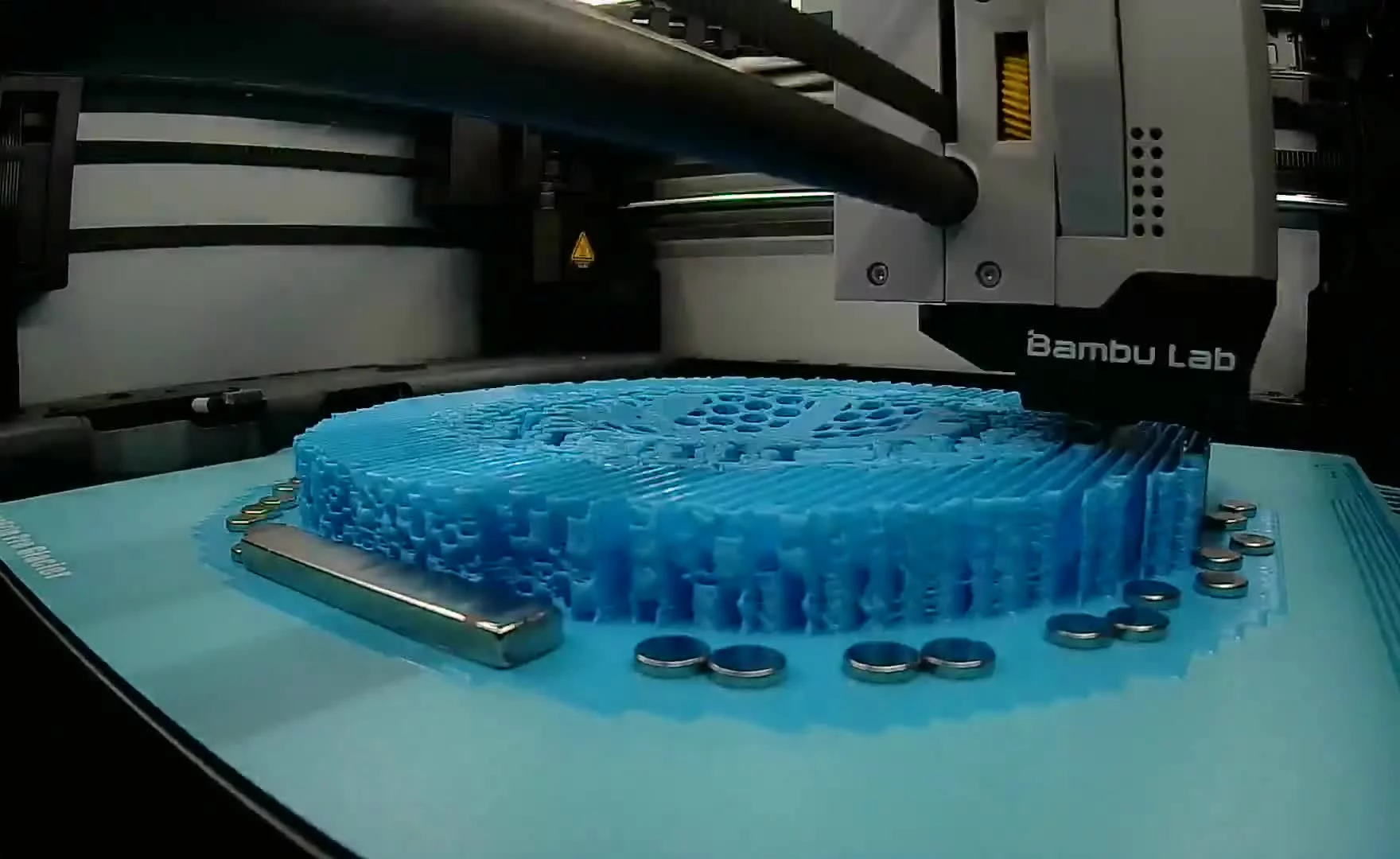
Pushing the Limits: 3D Fuel PCTG-CF Tensile Strength Test
Camera shake toward the failure point is due to my rig and camera being mounted to the same workbench, and the unexpected amount of force required to break this stuff!
Sometimes the only way to know if a material is up to the job is to try to break it.
In this video, a 3D printed test specimen made from carbon-fiber reinforced PCTG filament produced by North Dakota-based 3D Fuel is subjected to a tensile strength test to evaluate its mechanical performance for use in an upcoming H3DForge product currently under development.
The result? The part held just shy of 700 pounds of tensile load before finally failing. For a 3D printed polymer component, that’s seriously impressive strength.
At the end of the video there’s also a short comparison segment showing a test of standard PCTG-Pro from 3D Fuel. While it doesn’t quite reach the same level as the carbon-fiber reinforced variant, it still held over 600 pounds before failure, which is remarkable performance for a non-reinforced material.
Testing like this helps validate real-world performance and ensures that materials selected for H3DForge products are chosen for strength, durability, and reliability.
And if nothing else, it answers the most important engineering question:
“Yeah… but how hard can we pull on it before it breaks?”
Test sample printing specs:
Printer: Bambu X1C
Filament: 3D Fuel Pro PCTG-CF10, 10% Carbon Fiber PCTG, 1.75mm
Model Length: 93.6 mm
Model Width: 77.2 mm
Model Thickness: 6 mm
Layer height: 0.20 mm
Sparse infill density: 50%
Sparse infill pattern: Gyroid
Nozzle diameter: 0.4 mm
Nozzle type: E3D Obxidian Hardened Steel
Volumetric flow rate: 29 mm3/s
Initial layer height: 0.20 mm
Wall loops: 6
Top shell layers: 5
Bottom shell layers: 5